
If you own a home or commercial space in India and need a big-ticket loan, a loan against property often feels like the most “solid” option on the table. It’s secured by your real estate, usually cheaper than personal credit, and flexible enough to fund everything from business expansion to your child’s higher education.
This guide walks you through how a loan against property works in 2026, the fine print lenders don’t always spell out, and practical ways to decide if it actually fits your situation before you sign a single form.
What Is a Loan Against Property in Simple Terms?
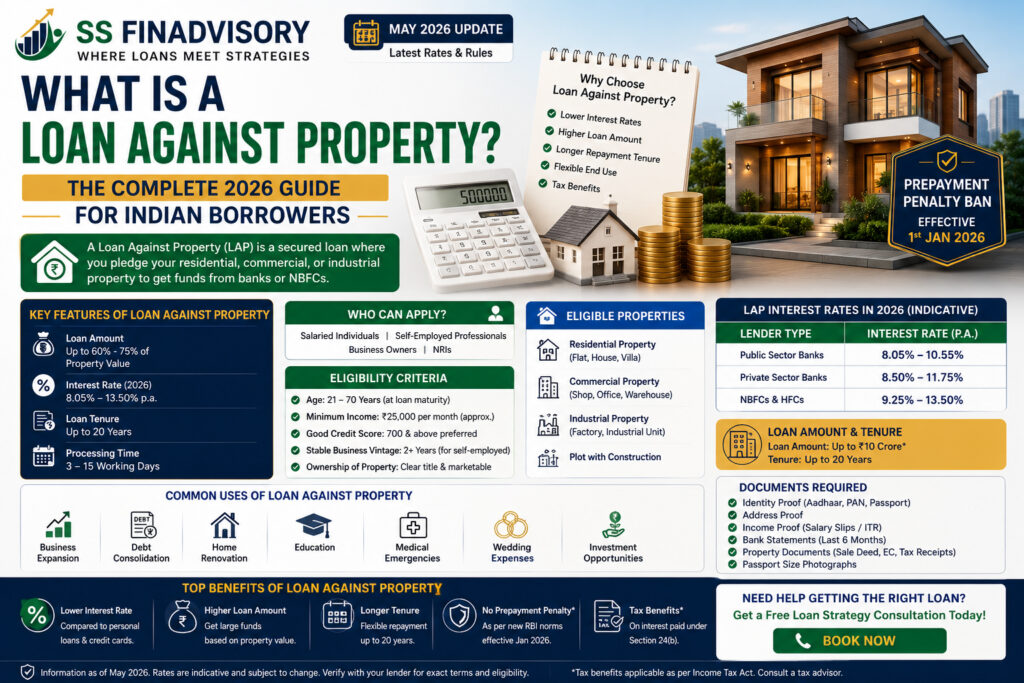
A loan against property is a long-term credit facility where you pledge your residential or commercial real estate as security and borrow a percentage of its current market value. The bank keeps your documents, creates a charge on the asset, and you keep using the property while repaying the loan in EMIs.
Lenders in India treat this as a type of secured loan, which means they feel more comfortable offering higher amounts and longer tenures, but they also have the legal right to sell the collateral if you repeatedly fail to pay.
How a Loan Against Property Actually Works
When you apply for a LAP loan, the lender doesn’t just look at your income slips and bank statements; they also evaluate the legal status and market value of the asset you are pledging. Expect a legal check, valuation visit, and a review of your credit history before they share a final sanction letter.
Most banks will lend anywhere from 50% to 70% of the property’s assessed value, and the approved limit also depends on your age, existing EMIs, and documented income profile as a salaried or self-employed borrower.
Key Features You Should Know
In India, this kind of property loan typically comes with a longer tenure than personal finance, stretching up to 15–20 years, which helps keep EMIs manageable for middle-class families and small business owners. Some lenders allow interest-only payments for a short period, especially for self-employed professionals managing seasonal cash flows.
The interest rate is usually linked to an external benchmark like the repo rate, and even a 0.5% difference adds up over a long tenure, so it pays to compare offers across public sector banks, private lenders, and select NBFCs before locking yourself in.
Loan Against Property vs Standard Mortgage Loan
A traditional mortgage loan in India is mostly used to buy a new house, whereas this product is designed to raise funds against property you already own outright or on which very little balance is pending. That’s why people often turn to this option for funding goals that are not directly related to real estate.
While both products are secured against real estate, a mortgage loan used for a home purchase often comes with slightly different tax treatments and eligibility norms compared with borrowing on an existing asset.
Types of Properties You Can Pledge
Most lenders are comfortable offering a mortgage against property that is fully constructed, legally clear, and located in an approved residential or commercial area. They usually avoid disputed assets, unregistered plots, and properties with serious structural issues or missing approvals.
If you are considering a loan on property that was inherited, make sure succession and ownership papers are updated, because lenders will insist on clarity before moving ahead with file processing or disbursal.
Using a Loan Against Residential Property
Many Indian families prefer to raise funds through a loan against residential property instead of selling the house, because they continue to live in it while using the borrowed capital for education, medical costs, or debt consolidation. This approach can make emotional sense, but only if the repayment plan is realistic.
Lenders may offer slightly better terms if the house is self-occupied, well maintained, and located in a prime or fast-developing area with good resale prospects and clear municipal records.
Commercial and Mixed-Use Properties
Self-employed borrowers often pledge shops, small office units, or industrial sheds to get a property-backed loan for business expansion, working capital, or equipment purchases. For such cases, lenders may look more closely at business financials and GST returns to judge cash flow stability.
For mixed-use buildings, banks typically assess how much of the space is residential versus commercial before deciding whether to classify and price it closer to a home-backed facility or a business-focused structure.
Eligibility, Documents, and Typical Costs
To qualify, you need stable verifiable income, acceptable credit history, and a property that passes technical and legal checks. Lenders evaluate your repayment capacity, calculate a conservative income-to-EMI ratio, and then set a sanction amount that fits within their internal risk policies.
For documentation, be prepared with identity and address proofs, income records, bank statements, title deeds, prior loan closure letters if any, and approved building plans so that the property mortgage loan file is not delayed over avoidable paperwork gaps.
Charges Beyond the Interest Rate
Borrowers often focus only on the quoted rate and overlook processing fees, valuation charges, legal opinion fees, and prepayment penalties, which can quietly push up the real cost. It’s wise to ask your relationship manager for a written break-up and negotiate wherever possible.
You should also check how the lender handles part-prepayments, because flexible terms can help you shrink the outstanding mortgage against property faster whenever you receive bonuses, profits, or unexpected inflows.
How Much Can You Actually Borrow?
The sanctioned value depends on your income profile and the lender’s loan-to-value ratio, not just the market price you believe your flat or building can fetch. A conservative assessment by the bank’s valuer often brings the eligible amount down from your expectations.
Self-employed professionals, especially those declaring lower income to save tax, may qualify for a smaller facility, so they should plan early and adjust tenure and EMI structure carefully before committing to a large loan against immovable property.
Smart Uses, Risks, and Practical Tips
This facility works best when you use it for productive goals like business expansion, high-interest debt consolidation, or essential big-ticket needs rather than lifestyle spends. The long runway and relatively lower rate compared to unsecured borrowing make it a powerful but demanding commitment.
Before signing, walk through best and worst-case scenarios for your cash flow across the entire tenure, because default can lead to recovery proceedings and the forced sale of your pledged real estate asset.
Good Use Cases for a Property-Backed Loan
Many entrepreneurs prefer this route over unsecured borrowing because they can access a higher limit and tailor the structure to their business cycles while keeping ownership with themselves. When used carefully, a property-backed loan can also help replace multiple costly credit card or personal finance obligations with one structured EMI.
Families sometimes use a loan against property to partly fund overseas education where fees are high and timelines are tight, but they should still compare this route with dedicated education finance before finalizing.
Major Risks You Should Not Ignore
The biggest risk is losing your real estate if you cannot keep up with payments for a sustained period, especially during business downturns or job loss. Recovery action can be stressful, and once a sale notice is issued, reversing the process becomes very difficult.
There is also interest rate risk because most India-linked products are floating; if repo-linked rates rise sharply, your EMI or tenure may change, affecting long-term affordability on the loan on property you have already taken.
Bringing It All Together for Your 2026 Decision
A carefully planned loan against property can be a powerful tool for Indian borrowers who need large, reasonably priced funding and have a stable way to service EMIs over the long term. The key is to respect the risk of pledging your home or business asset and avoid using this facility for non-essential spending.
If you’re weighing this option, compare offers from at least three lenders, run conservative repayment calculations, and consider speaking with a trusted advisor at ss finadvisory before finalizing any paperwork so that your decision around a loan against property is both informed and sustainable.