
If you’re trying to figure out how to get loan against property in 2026, you’re likely looking for a large-ticket loan without selling your real estate. Maybe it’s to expand your business, consolidate higher-interest debt, or cover a big personal expense without swiping multiple credit cards.
The good news is that banks still love secured credit, but the bar for documentation and risk checks has gone up. The better news? Once you understand how lenders think, you can shape your application to fit what they want and significantly improve your odds of fast approval.
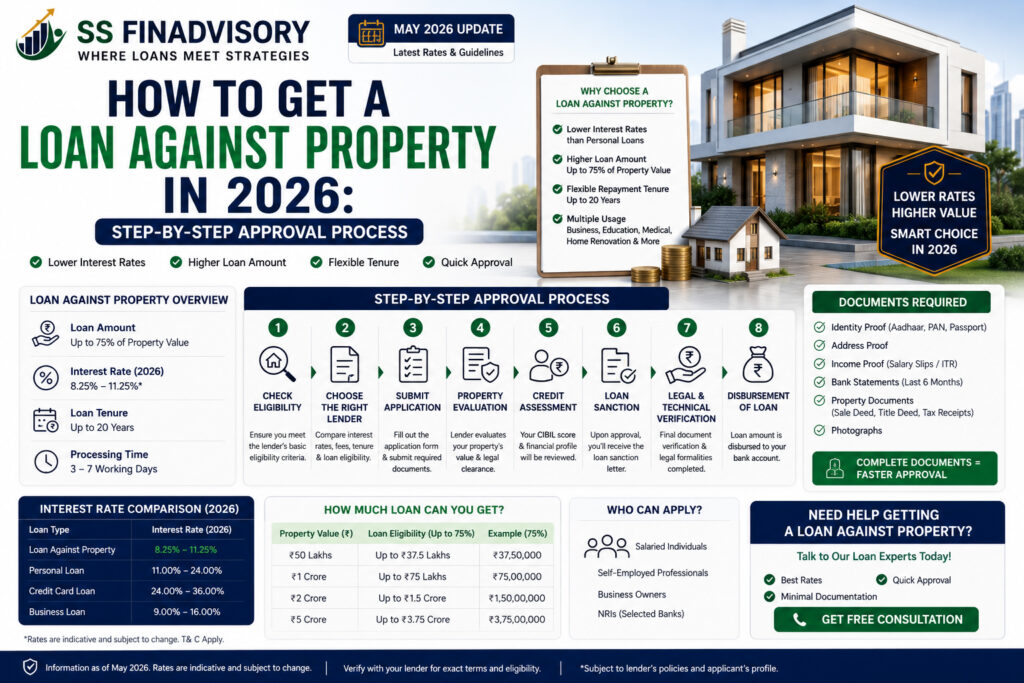
How to Get Loan Against Property: Big-Picture Roadmap
Before diving into forms and signatures, it helps to see the full journey from first enquiry to final disbursement. This bird’s-eye view of the loan against property process will stop you from missing small but costly steps.
Most lenders in India and other major markets will follow a broadly similar structure with minor differences in internal rules, turnaround times, and eligible property types.
Typical Stages from Enquiry to Disbursement
Here’s how the secured loan process usually plays out in practice, assuming your income profile and property both pass basic filters.
- Initial screening: Bank or NBFC checks your age, income range, property city, and basic loan requirement.
- Document collection: You share KYC, income proofs, bank statements, and initial property papers.
- Credit assessment: Underwriters review your repayment capacity and past repayment behaviour.
- Property verification: Legal and valuation teams confirm ownership and market value.
- Sanction and offer: You receive a sanction letter with loan amount, tenure, and interest rate.
- Final signing and disbursement: After signing the agreement and completing security creation, funds are released.
Keeping this flow in mind makes the detailed LAP application process much easier to follow, because you’ll understand why each document or question really matters.
Step 1: Check Eligibility Before You Apply
Many borrowers start looking at interest rates without first checking if they even fit the basic filter for a mortgage loan process, which leads to delayed decisions or repeated rejections. A quick self-check saves you time and protects your credit score.
Lenders usually want predictable income, clear property ownership, and a loan amount that fits within your repayment capacity based on current obligations and declared earnings.
Key Eligibility Factors Lenders Review
To get through the early property loan approval checks smoothly, focus on four simple numbers the credit team cares about more than fancy packaging.
- Age: Typically 23–60 for salaried and up to 65 for self-employed at loan maturity.
- Income stability: Minimum net income threshold, often proven over 6–12 months for salaried or 2–3 years for business owners.
- Obligation ratio: Total EMIs preferably under 50–60% of net monthly income.
- Credit score: 700+ improves your negotiating power on rates and fees.
Once you know you broadly qualify, you can start comparing bank loan against property offers instead of wasting energy on lenders that simply can’t lend to your profile.
Step 2: Prepare a Clean, Complete Document Set
One of the fastest ways to speed up how to get loan against property in real life is boring but effective: keep every important document ready and in one place. Missing papers are the top reason files get pushed to the bottom of an underwriter’s pile.
Think of your document file as a trust packet. The neater and more consistent it is, the less nervous the credit and legal teams feel while reviewing your case.
Core Documents for Most Lenders
The exact LAP application process checklist changes slightly from bank to bank, but most ask for the same core set of income, identity, and ownership proofs.
- KYC: PAN, Aadhaar or passport, recent photographs, and address proof.
- Income: Salary slips, ITRs, Form 16, profit-and-loss statements, and GST returns where relevant.
- Banking: Last 6–12 months’ bank statements for main operative accounts.
- Property: Title documents, sale deed, prior chain documents, tax receipts, and sanctioned plan where applicable.
If you arrange your papers in labeled folders and keep scanned copies handy, you’ll find the loan against property application moves through internal teams far more smoothly.
Step 3: Understand Internal Credit & Valuation Checks
Once your file is logged in, the lender’s back-end work starts, and this is where many borrowers feel left in the dark. Understanding the internal mortgage approval logic helps you answer queries calmly instead of panicking at every phone call.
Behind the scenes, underwriters test one simple thing: can this borrower comfortably repay the EMI across the entire tenure without default, even if income fluctuates slightly or interest rates shift.
How Lenders Look at Risk
The bank’s loan process guide usually instructs staff to look at three buckets: you as a borrower, the property as security, and the wider economic context. If all three look reasonable, approval becomes far more likely.
- Borrower view: Stability of job or business, clean repayment track, and consistent declared income.
- Property view: Clear title, acceptable usage type, and valuation comfortably covering the requested loan.
- Market view: City, area, and segment trends that influence resale potential in a worst-case scenario.
Each check ties directly into the secured loan process because the bank wants both the EMI stream and a solid backup via saleable collateral.
On the valuation side, you can expect conservative numbers, which means LAP approval is typically capped at 50–70% of the fair market value depending on property type and policy.
Step 4: From Sanction Letter to Final Disbursement
If everything looks good, the lender issues a sanction letter summarizing the terms and validity. Treat this like a formal offer document rather than a casual approval, and read every line carefully.
Interest rate type, prepayment rules, processing fees, and insurance add-ons might look like small clauses, but they shape your total cost of borrowing over several years.
What Happens After You Accept the Offer
Once you sign and return the sanction, the loan against property process continues with final technical and legal checks to clear any small doubts left in the file.
Depending on policy, the LAP application process at this stage may include a last round of property inspection, updated bank statements, or clarifications on any recent large credits in your accounts.
After that, the mortgage loan process moves to the final stage: you sign the loan agreement, create the mortgage through deposit of title deeds or registration as required, and the bank schedules disbursement.
Only when all post-sanction steps are complete will the property loan approval be marked as fully closed and ready for payout by the operations team.
Smart Tips to Improve Your Chances of Approval
Understanding how to get loan against property is useful, but tilting the odds in your favour is even better. A few small moves before and during your application can materially change how a credit officer views your case.
The stronger your profile looks on paper, the more room you have to negotiate on interest rate spreads, processing charges, and even top-up options later.
Practical Moves Before You Apply
Start by pulling your latest credit report so you can spot and correct errors before any mortgage approval check happens on the lender’s system.
- Close or reduce unused high-limit credit cards that push up your theoretical exposure.
- Clean up any minor overdues or disputed entries with proper documentation.
- Avoid multiple hard enquiries from many lenders in a short span of time.
During the active loan against property application, answer every query with clear documents, not long explanations, because credit teams respond far better to hard evidence than to verbal assurances.
If you’re unsure about loan structure, ask the bank loan against property team to share amortization schedules for different tenures so you can see exactly how the EMI and interest outgo change.
For complex cases, especially where income is seasonal or mixed (salary plus business or rental), it helps to request a detailed loan process guide from the relationship manager and match your paperwork to those expectations point by point.
Once you understand each stage in the secured loan process, you can time your cash flows and property plans without last-minute surprises or rushed paperwork.
Bringing It All Together: Your Next Steps
If you’ve read this far, you now have a clear, practical view of how to get loan against property, from the first eligibility check to the final disbursement hitting your account. The biggest wins come from clean documentation, realistic expectations on valuation, and honest communication with your lender.
If you’d like expert help shaping your file, comparing offers, or planning your EMI strategy, reach out to a trusted advisor such as ss finadvisory before you sign anything; a short, focused review at the start can easily save you money and stress over the full life of the loan.