
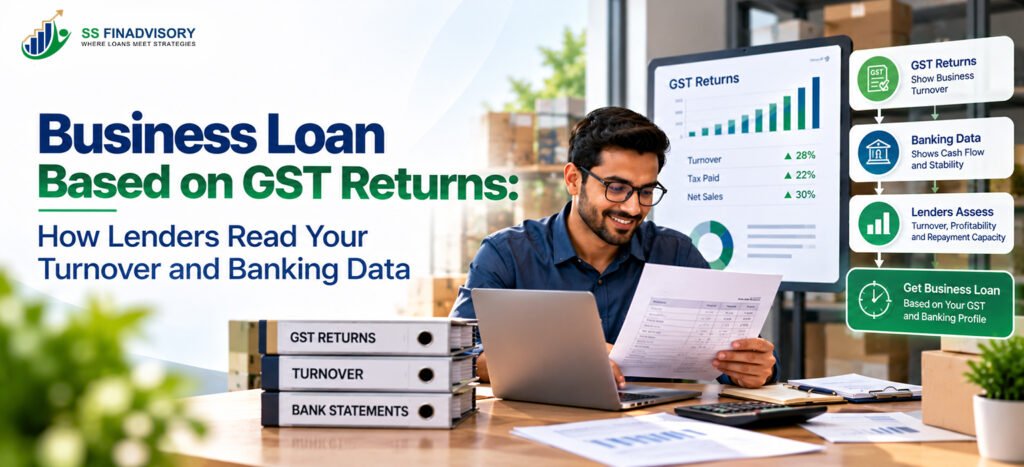
A business loan based on gst returns sounds simple on paper, but the way banks in India actually read your GST and banking data is rarely explained clearly. Lenders are quietly using those numbers to judge if your turnover is real, if your profits are stable and how much working capital your business can safely handle.
If you understand what the credit manager is really seeing on your GST portal and in your bank statements, you can prepare your files, ask for the right structure and avoid limits that are either too low or too expensive. We will walk through how turnover is read, what red flags hurt your case, where a consultant helps, and how this fits with other options like loan against property for working capital or regular cash credit.
How Lenders Use GST Data For Working Capital Limits
Banks use GST returns as a quick honesty check on your declared turnover and as a base to size fund based and non fund based limits. For a business that files returns properly, GST numbers often carry more weight than whatever is printed in a thin set of provisional financials.
Credit teams usually start by looking at your GSTR 1 and 3B month by month, then comparing that pattern with your banking credits and stock levels. If you are planning to move towards a business loan for new business in a related entity, they will still lean heavily on the existing unit’s GST trail to get comfort.
What Exactly They Read In Your GST Returns
When a lender says they are offering a business loan based on gst returns, they are really talking about using your GST data as the starting point for assessing turnover and stability. They are not promising to ignore banking, collateral or your existing debt.
First, they add up your outward taxable supplies for the last 12 to 24 months and annualise that to a turnover number. Then they check if the nature of supplies, tax rates and place of supply match what your profile suggests. If you also need limits like bank guarantees or LCs later, their view of your scale from GST will affect how they sanction those, as we discussed in our post on Bank Guarantee and Letter of Credit for Small Businesses.
Turnover Patterns And Seasonality
Banks dislike sharp, unexplained spikes in GST turnover, especially if they see matching spikes in banking only at year end. They are more relaxed when the GST pattern reflects a clear season or project cycle, and your explanation matches the purchase and stock story.
If your business is seasonal, document that in board notes or internal MIS and keep it ready; it makes the credit conversation smoother and fits well when you prepare CMA Data for Bank Loan for a bigger limit revision.
Mismatch Between GST And Financials
Credit managers will quietly compare your GST-based turnover with the turnover in your audited balance sheet. A big gap in either direction invites questions because it suggests under reporting somewhere or frequent backdated corrections.
Before you apply, sit with your accountant and reconcile GST totals with books and bank credits so you are not discovering a mismatch at the branch table. Where we see issues is when stock statements for Cash Credit Renewal and Stock Statements tell a very different story from GST, and the bank starts doubting the entire picture.
How Banks Read Your Banking Data Alongside GST
Lenders always put GST and banking data together before they decide on any working capital structure. If GST shows turnover that never seems to land in your current account, they will not treat that turnover as fully bankable. If you’d rather hand this part over, it’s the kind of work our home Loan age Limit team handles every week.
The basic checks are simple but strict. They look at total credits vs GST turnover, how many days limits stay overdrawn, how often EMI or interest payments bounce and how much of your day to day business runs through cash or other banks. For many MSMEs, this is where a Business Loan & Working Capital Planning exercise starts paying off.
Cash Credit Conduct And Limit Usage
For borrowers with existing CC or OD, conduct is as important as fresh GST numbers. A well conducted cash credit account with regular credits, few overdrawings and proper stock submissions can offset one or two weak months in GST.
On the other hand, if you are asking for cash credit limit enhancement at the same time that your account has frequent TODs and irregular interest servicing, the credit manager will use GST data to argue that the existing limit already covers your reasonable needs.
Banking Surrogates For Newer Businesses
Newer businesses often have lean financial statements, so lenders rely more on banking surrogates like average monthly credits, cheque bounce history and salary or vendor payment discipline. GST returns still matter, but they work as a cross check, not the only input. It’s one of the first things we look at in any Loan Against Property for MSMEs project.
If your company is young but you have strong collateral, it can make sense to compare a pure GST-based structure with a loan against property for business structure and see which gives better pricing for the same drawing power.
Typical Structures For A Business Loan Based On GST Returns
Most lenders in India do not have a single product called a GST loan. They offer working capital term loans, cash credit, overdraft and sometimes unsecured business loans that use GST as a key input in assessing turnover based eligibility.
For established MSMEs, sanctioned limits usually end up as a mix of CC against stock and book debts, term loans against machinery and occasionally longer tenure property backed products. Some owners also look at a Business Loan vs Loan Against Property comparison when deciding how much to keep unsecured.
Turnover Based Working Capital Limits
Turnover based working capital limits are common in segments like traders, distributors and service providers with low fixed assets. In these cases, lenders apply a margin assumption on your GST turnover to work out how much short term funding you reasonably need.
Those limits are then backed by collateral where possible, but the core logic still comes from the GST trail. Many MSMEs pair such limits with guidance from a msme loan consultant so the sanction terms match their cash conversion cycle.
Where A Consultant Actually Helps
Most owners first think of a business loan consolidation specialist only after they are already juggling multiple EMIs and CC limits. That is usually late. The better time is when you are planning the first serious working capital structure on the back of two or three years of GST data.
A good business loan consultant in kolkata or any other city starts by cleaning the data trail you already have. They will reconcile GST with books, normalise one off months, and then prepare projections and CMA in a language your bank understands.
MSME Focused Advisory
Smaller firms often do not have a full time finance controller, which is why they look for an external msme loan consultant instead of learning every credit policy rule themselves. That is sensible as long as you stay involved in key decisions.
Consultants who understand Working Capital Loan for MSMEs deeply will push back if a lender is forcing too much of your funding into short tenure term loans where a revolving structure would fit better.
Common Mistakes That Hurt Your Loan Sanction
Several problems we see in sanction files have nothing to do with the strength of the business and everything to do with presentation and inconsistency. Sloppy GST filing and patchy banking habits just make it harder for a banker to defend your case.
One frequent mistake is splitting turnover across many GST registrations and bank accounts without a clear consolidation story. Another is applying for working capital finance for small business from many lenders at once rather than planning a single, well justified structure based on realistic projections and How Businesses Can Reduce Working Capital Interest Costs Without Cutting Their Credit Limit.
It also hurts when owners focus entirely on sanction amount and ignore covenants. Aggressive instalment schedules, tight renewal conditions and restrictions on withdrawals can turn a decent sanction into a daily headache.
Before signing, take a slow look at pricing, security, repayment terms and what happens if cash flow dips for a quarter. At that stage, independent business loan advisory services can bring in examples from other sanctions in your industry and point out terms you might have missed.
Conclusion
The core idea behind a business loan based on gst returns is that your tax and banking trail should speak clearly enough for a lender to trust your turnover and margins. Clean filings, consistent bank conduct and a structure that matches your cash cycle do more for your sanction than any one document.
If you want help reading your own GST and banking data the way a credit manager would, and then shaping a smarter proposal, speak to a specialist at ss finadvisory before you walk into the next bank meeting.
Frequently Asked Questions
Q1. Can I get a business loan only on the basis of GST returns?
Ans. No, lenders in India rarely sanction purely on GST data. They also look at banking conduct, financial statements, existing loans, collateral and your credit history. GST returns are an important starting point, not the only input.
Q2. How many months of GST returns do banks usually ask for?
Ans. Most banks prefer to see at least twelve months of consistent GST filing, and many will look at two financial years if available. Longer history gives them a better feel for your seasonality, growth trend and record of timely compliance.
Q3. Will minor GST filing errors affect my business loan eligibility?
Ans. Isolated minor errors that are quickly corrected usually do not derail a proposal. Repeated mismatches, delayed filings or frequent revisions raise doubts about the reliability of your numbers, which can push the bank to lower limits or tighten terms.
Q4. Does cash turnover that is not reported in GST help with a bank loan?
Ans. Cash turnover that does not feature in GST or your books generally does not help your formal borrowing capacity. Banks work with what they can see and verify, so unreported sales tend to hurt both your eligibility and your credit profile over time.
Q5. How does a loan against property compare with a GST based working capital loan?
Ans. A loan against property usually offers a larger sanction and longer tenure, but it ties up collateral and may carry different covenants. A GST based working capital structure is closer to your day to day needs but often comes with tighter renewal reviews and conduct conditions.
Q6. Should I approach multiple banks at the same time for a GST based loan?
Ans. Approaching a couple of lenders for comparison is fine, but many parallel applications can worry credit teams once they see enquiries on your reports. It is better to prepare a strong, consistent proposal and discuss it properly with a small number of banks.