
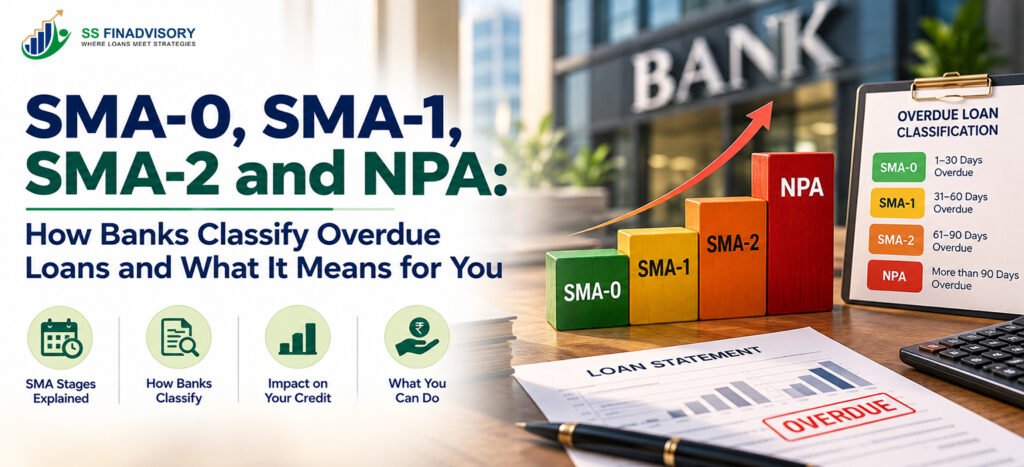
SMA NPA classification in India is the quiet system banks use to grade overdue loans and decide how much risk you are. Once those tags move from standard to SMA and then NPA, your bargaining power falls and the bank starts calling the shots.
If your EMIs or interest debits are getting harder to service, you need to know exactly how many overdue days matter, what each bucket means and when it starts hurting your CIBIL score. As we walk through SMA 0, SMA 1, SMA 2 and NPA, we will keep the focus on what it means for term loans, working capital and the real choices you have before labels harden. If you’d rather hand this part over, it’s the kind of work our increase Home Loan EMI team handles every week.
How Banks Move Loans Through SMA And NPA Buckets
Banks grade every loan by days past due, which is simply how many days have passed since you were supposed to pay and did not. For term loans, RBI rules push banks to start tagging an account as soon as one full EMI or instalment is overdue, and they watch that days past due figure closely after that point, just like they watch detailed numbers in a CMA Data for Bank Loan pack before they even sanction a limit.
In practice, SMA 0 usually means there has been some overdue in the last 30 days, SMA 1 covers 31 to 60 days overdue, SMA 2 covers 61 to 90 days overdue and after 90 days the account normally turns NPA. Once you understand how quickly those days add up, it becomes easier to read any bank message about your account and see where you really stand.
SMA 0, SMA 1 And SMA 2 As Early Warning Signals
SMA tags sit between a clean standard account and a declared NPA, and they act as early warning sirens. Banks monitor these stages closely and many now share more of this behaviour data with bureaus, so repeat late payers stand out even before a formal default.
For a home loan or personal loan, SMA 0 normally means you have some overdue, but you are still within 30 days of the EMI due date. If your EMI has already bounced and you want a clear line of sight on calls, notices and timelines, the guide on Missed a Home Loan EMI in India walks through that sequence in detail based on how banks in India act in real files.
Once your overdue crosses 30 days but stays within 60 days, most banks move the account into SMA 1 and may start treating you as a stressed borrower. At that point they usually push harder for part payments, fresh cheques or short term fixes, instead of discussing deeper changes like debt consolidation advice that could actually solve the pattern. It’s one of the first things we look at in any best Home Loan Bank project.
SMA 2 is the last stop before NPA and usually covers 61 to 90 days overdue. By then internal alerts go off, senior managers may review your file and you have to regularise the account fast or accept that it is sliding into default status that will stay visible for years on bureau reports.
What NPA Status Means In Real Life
Once a loan is tagged NPA, the bank treats it as a non performing asset and has to follow stricter recovery rules. For you, that usually means more pressure from collections, a higher chance of legal notices and a tougher time getting fresh credit anywhere, even for small needs.
NPA status never sits quietly in one branch file, it is reported to credit bureaus and shared systems that other lenders use when they screen new proposals. If you already have multiple facilities and need to tidy them before stress shows up everywhere, the strategy in Consolidate Multiple Business Loans and Credit Facilities Into a Smarter Funding Structure is worth studying while accounts are still standard.
How SMA NPA Classification Hits Different Loan Types
The sma npa classification logic is common across products, but the way it plays out on the ground feels different for each type of borrower. With home and other retail term loans the story is mostly about EMIs, your repayment track and how fast you catch up after a miss, which is why understanding your CIBIL Score for Home Loan matters long before a bank labels anything as stressed. We run into this a lot when clients come to us for Reduce Home Loan EMI.
On a floating rate home loan, EMI jumps after repo moves can quietly push you closer to SMA if income has not grown in step. If you want to see how rate changes feed into those EMIs and what levers you still have, the breakdown in RBI Repo Rate & Home Loan EMI sets out the link with real math and example scenarios.
Working capital limits like CC or OD do not run on EMIs, so banks watch how long the account stays out of order, how regularly interest is serviced and whether drawing power is respected. For many smaller firms, tighter projections and clean conduct supported by solid CMA Data for Bank Loan can give the lender enough comfort to keep the account standard instead of downgrading it. Getting it right early saves a lot of rework, and it’s a regular part of our Business Loan Consolidation work.
Short tenure business term loans or equipment loans sit somewhere in the middle, with banks watching both EMI discipline and overall business health. Owners who are trying to juggle vendor pressure, card dues and loan instalments often benefit from an outside view from a debt management advisor india who can rank which facilities must stay current and which can be reworked first.
Using Restructuring And Consolidation Before Things Turn NPA
Move Early When You See Stress
Avoiding SMA or stopping it from turning into NPA is less about perfect forecasting and more about reacting quickly to the first signs of trouble. The single worst move is to go silent after a missed EMI or returned interest debit, especially when you still have options like a Loan Against Property for Debt Consolidation that can simplify your repayments.
Open, early calls with the bank give you more room to ask for temporary relief, short moratoriums or small tweaks. For property owners juggling several high cost loans, moving those into one structured facility can make it much easier to plan cash flows than trying to remember half a dozen dates and debits across the month.
Restructure Working Capital Thoughtfully
Businesses facing seasonal cash flow swings can often sit with experts in working capital loan restructuring to realign limits, margins and tenure with realistic inflows. That conversation is far smoother when you are still in SMA 0 or SMA 1 rather than already classified as NPA.
If you know that several facilities are straining at once, you might also want to revisit how your CC and overdraft limits are set up against your actual working capital cycle. The playbook in How Businesses Can Reduce Working Capital Interest Costs Without Cutting Their Credit Limit offers practical ways to cut interest cost while keeping day to day liquidity intact.
Plan Around Your EMI Load And Score
Retail borrowers sometimes need a different style of support, especially once their CIBIL score has already slipped because of late payments. Focused credit score improvement guidance and simple habits like checking bureau reports, clearing small revolving balances and aligning EMI dates with salary credits can slow the slide. If you’d rather hand this part over, it’s the kind of work our Home Loan advisor Kolkata team handles every week.
When monthly instalments are already eating too much of your income, a realistic emi burden reduction plan that looks at tenure changes, part prepayments or switching to better terms can create some room. If you also carry business exposures, pairing those moves with broader debt consolidation advice instead of treating each loan in isolation usually gives a clearer path out.
Watching Your Credit Health While You Fix Cash Flow
Track What Lenders Can See
While you are negotiating with banks, your credit report is recording every delay and that affects the rate and terms you will see on future offers. SMA tags may not always appear clearly, but repeated late payments and any NPA label almost always drag your score down.
Reviewing your reports regularly and understanding how overdue days translate into score movement matters as much as getting the cash together. For a closer look at how lenders read consumer reports, the article on CIBIL Score and Credit Health explains what ranges most banks like and how they think about risk bands.
Protect Business Borrowing Linked To Personal Track
Small business owners also need to remember that banks often lean on personal credit history when they give smaller working capital lines. If your CC account is always near the limit and interest debits keep slipping, it might be time to talk to your banker about a formal cash credit limit enhancement or a reshaped working capital package.
For founders planning a bigger expansion in the next year or two, combining those changes with a careful review of working capital loan vs cash credit options can put you in a stronger place when you next sit across the table from a lender.
Conclusion
Labels like SMA 0, SMA 1, SMA 2 and NPA move faster than most borrowers expect, and once an account crosses into NPA your room to negotiate shrinks sharply. Staying aware of sma npa classification, talking early with lenders and using tools like consolidation or support from a loan restructuring consultant at the right time can keep you in control instead of reacting to legal notices.
If your accounts are already showing early stress, getting a calm outside view from a firm such as ss finadvisory on your mix of loans, security and cash flows can mean the difference between a rough patch and a long credit hangover. List every overdue honestly, check which buckets you are already in and start firm conversations with lenders before the next due date passes, even if that means first gathering data using a simple loan against property EMI calculator so you know what any new proposal really costs.
Frequently Asked Questions
Q1. What is SMA in banking and how is it different from NPA
Ans. SMA is a Special Mention Account tag banks use for loans that are overdue but not yet treated as NPA. It usually covers the period from the first overdue instalment until 90 days past due, split into SMA 0, SMA 1 and SMA 2. NPA, or non performing asset, starts after 90 days overdue and signals a default in the banking system.
Q2. Does SMA status affect my CIBIL score immediately
Ans. SMA is mainly an internal tag, but the late payments behind it are reported to credit bureaus. Repeated delays of 30 days or more often hurt your score, especially on home, auto or personal loans. The best way to limit damage is to bring instalments back to regular and keep them that way for many months.
Q3. How many days overdue before a home loan becomes NPA in India
Ans. For most home loans, banks in India treat the account as NPA when interest or instalments stay overdue for more than 90 days. Before that, it will usually move through SMA 0, SMA 1 and SMA 2 depending on how long the EMI has been unpaid. Exact internal practice can vary by lender, but the 90 day marker is common.
Q4. Can a borrower get a loan after one account has turned NPA
Ans. Getting a fresh loan after an NPA tag is possible, but it is usually harder and more expensive. Lenders check why the earlier loan went bad, how it was settled or closed and how you have handled other accounts since then. Closing or regularising the NPA and building a clean track record later can improve your chances over time.
Q5. Is loan restructuring better than missing EMIs when cash is tight
Ans. In most cases, speaking to the bank about restructuring before you start missing EMIs is better than falling into silent overdue. Restructuring does appear in your credit history and may limit fresh borrowing for some time, but it shows you are cooperating. Quiet defaults often trigger tougher recovery steps and more lasting damage to your name.
Q6. What should small business owners do first when their CC account is near NPA
Ans. Small business owners should first get a clear view from the bank of how long the account has been irregular and what days past due they are seeing. Then they should prepare realistic cash flow estimates and discuss options like fresh security, reassessment of limits or restructuring. Acting before a formal NPA tag gives far more room to negotiate and protects access to working capital later.