You’ve probably seen friends talk about “doing a home loan balance transfer vs prepayment” to save interest and finish the loan faster. But when you run the numbers on your own EMI, it isn’t obvious which route will actually save more in 2026, especially with frequent repo-linked rate changes in India.
The real question isn’t which option is popular. The real question is: given your remaining tenure, interest rate and cash in hand, should you shift the loan or attack the principal where it stands?
What Exactly Are You Comparing?
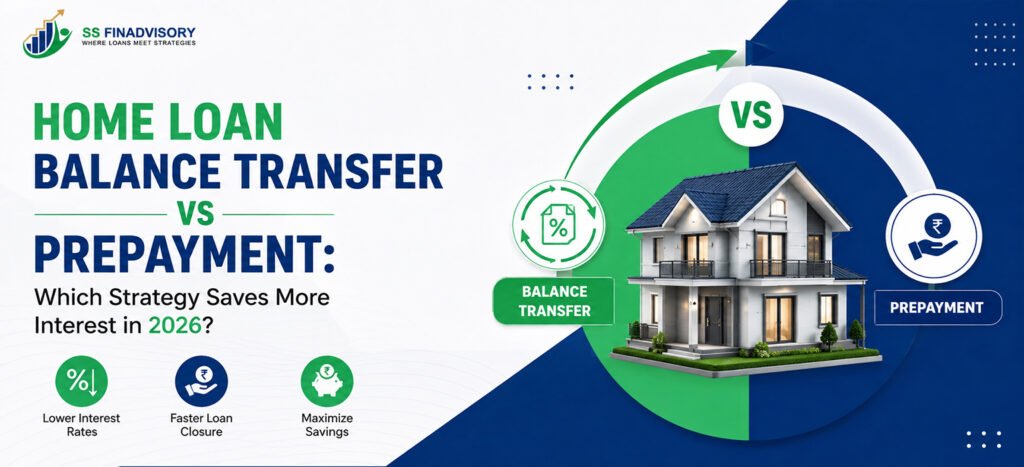
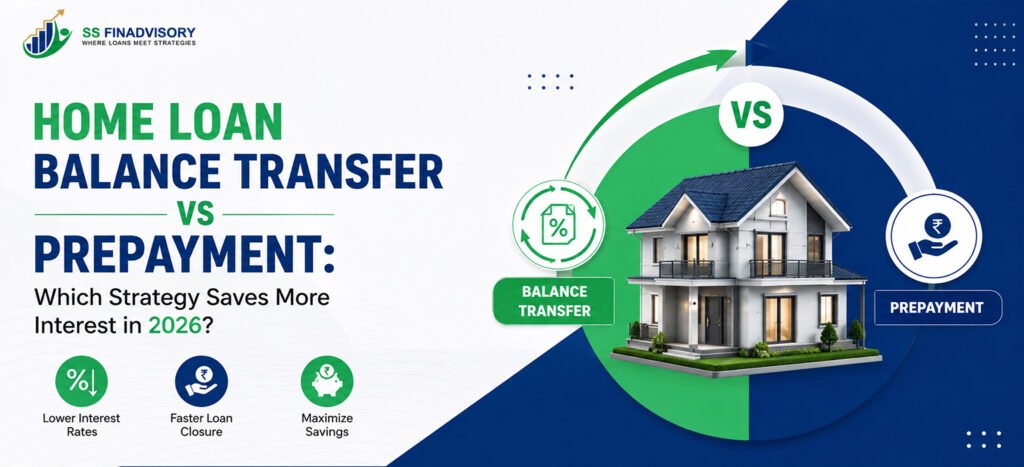
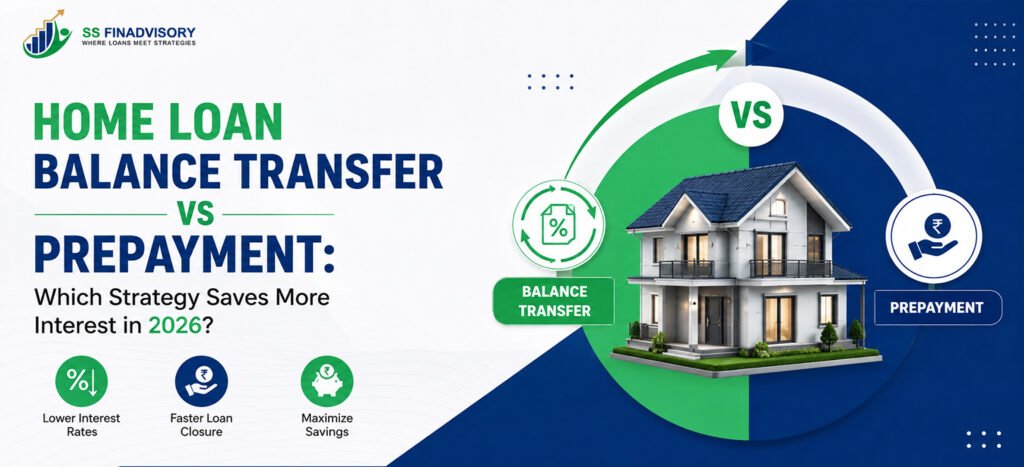
On paper, both strategies aim at the same goal: lower home loan interest outgo and faster closure. A home loan balance transfer means shifting your outstanding principal to another lender offering a better rate or different terms. Prepayment means putting extra money straight into the current loan so the principal drops.
Think of it this way. With a refinance, you’re changing the price of the money you’ve borrowed. With a lump-sum prepayment, you’re reducing the amount of money you’ve borrowed. The trick is to see which change is bigger in rupee terms, after accounting for charges and your investment alternatives.
Many lenders and agents highlight only the EMI reduction when they pitch a refinance home loan. EMI drop alone doesn’t tell you if you actually saved interest; sometimes it only means your tenure quietly went up.
How A Home Loan Balance Transfer Actually Saves (Or Loses) Money
A home loan balance transfer cuts interest only if the new rate is meaningfully lower than the current one, and you have enough tenure left for that lower rate to work. A rough rule: if your rate difference is small and you’re already in the last few years of the loan, the savings shrink quickly.
On top of that, you pay home loan transfer charges: processing fees, technical and legal valuation charges, and small incidental costs like documentation and CERSAI entries. These aren’t always large individually, but together they can eat into your expected saving if you don’t factor them in.
If you want a structured way to judge balance transfer benefits, look beyond the “0.25% cheaper” pitch. Ask the lender or advisor for a simple before–after amortisation comparison: total interest remaining with the current bank versus total interest with the new bank, including all one-time charges upfront.
For borrowers who don’t have the time or patience to chase multiple banks, a specialist service such as home loan strategy optimisation can do this comparative work, including checking whether a lower rate will come with stricter conditions or insurance bundling.
How Home Loan Prepayment Works In Your Favour
Home loan prepayment is brutally simple: every rupee you prepay stops generating future interest. Because home loans in India are usually on a reducing balance, prepaying early in the tenure blocks more interest than doing the same amount near the end.
Most banks allow partial prepayment on floating rate home loans without penalty, but they often set conditions on how often you can prepay or the minimum amount per transaction. These practical limits matter when you’re planning an annual bonus or sale of an asset as a prepayment source.
If your existing rate is already competitive and close to current market rates, prepayment often beats transfer. You remove principal without adding fresh paperwork, income re-assessment, or the risk that something in your profile will cause the new lender to lower eligibility or change their offer late in the process.
Three-Question Filter: Balance Transfer Or Prepayment?
Most Indian borrowers can get clarity using a simple three-question filter before choosing between a home loan balance transfer and prepayment.
1. How Much Tenure Is Left?
If you’re in the first half of your tenure with at least 8–10 years to go, a rate cut from a transfer can still save a lot of interest. In the last few years of the loan, prepayment generally wins because the interest component in your EMI is already low, so cutting the rate doesn’t change much.
For example, someone with 20 years left at a relatively high rate has more to gain from shifting than someone with only 6 years left on an already moderate rate. In the second case, putting any spare cash as prepayment often has a more visible effect on the remaining EMIs.
2. How Large Is The Rate Gap, Net Of Costs?
The gap between your current rate and the best offer you’re getting is the core of the decision. If the gap is tiny, the interest saving might not even cover the processing fee. A good advisor will compare your current lender’s “retention” offer as well, because banks in India often quietly reduce rates for existing home loan customers who negotiate actively.
This is where a service focused on balance transfer benefits tends to add value. They don’t stop at the headline rate; they ask how long that rate is fixed, what spread over repo is being applied, and how easily the bank can hike it later.
3. Do You Have Better Uses For The Cash?
Sometimes the maths isn’t about interest at all. If you’re running a business or planning a major life event, locking a big chunk of cash into prepayment may reduce your safety buffer. In such cases, a transfer to a lower rate and tenure reset, with smaller annual prepayments, may keep your liquidity healthier.
If, however, your income is stable and you already have a solid emergency fund, diverting surplus to prepayment once or twice a year can quietly shave years off the loan without the disruption of a refinance home loan process.
When Balance Transfer Makes More Sense In 2026
There are clear scenarios in India where a home loan balance transfer is the stronger choice for 2026. The most common is when you took the loan at a much higher spread over repo and your current bank is unwilling to bring you in line with new customers.
Another good case is when you want to shorten tenure aggressively but don’t have spare cash for a big prepayment. By refinancing into a lower rate and keeping the EMI roughly the same, more of every EMI starts going towards principal, cutting years off the schedule without a big one-time outflow.
If you’re juggling multiple EMIs and want a structured way to reduce the home loan burden first, exploring a dedicated reduce home loan EMI strategy can help you see where a transfer fits inside the bigger picture.
When Prepayment Quietly Beats Transfer
In many real files we see, prepayment is the unspectacular winner. This usually happens when the existing rate is not far from market levels, the remaining tenure is moderate, and the borrower has irregular but sizeable cash flows from bonuses, incentives or maturing investments.
In such cases, the best strategy is often to keep the loan where it is, set a target prepayment amount every year, and instruct the bank clearly to reduce tenure instead of EMI after each prepayment. Tenure reduction is what actually cuts your lifetime interest saving.
If you’re unsure whether your bank is correctly applying prepayments or showing the impact on your schedule, the articles on home loan prepayment give step-by-step ways to check your statement and amortisation chart.
Common Mistakes Borrowers Make With This Decision
The first big mistake is chasing a low EMI instead of total interest saving. Lenders know that a sharply reduced EMI feels good, so many balance transfer pitches extend the tenure and quietly raise lifetime interest even at a lower rate.
The second mistake is ignoring home loan transfer charges. A marginally lower rate often doesn’t justify the multiple rounds of documentation, legal checks, and processing fees that come with a refinance. This is especially true if your income profile is complex and banks take longer to understand it.
The third mistake is emotional: trying to close the loan too fast by draining all accessible savings into prepayment. A home loan is secured; losing your liquidity cushion to prepay a cheap loan while keeping high-interest consumer debt untouched can leave you financially exposed.
Before you decide, spend an hour pulling together your sanction letter, current statement and rate revision letters. With those documents, a structured comparison of balance transfer vs prepayment becomes far more reliable than back-of-the-envelope estimates.
Conclusion
Choosing between a home loan balance transfer vs prepayment isn’t about following a trend; it’s about matching your remaining tenure, rate gap and cash position to the right strategy for your situation in India. Large rate gap and long tenure usually point towards a well-planned transfer, while a fair rate and surplus cash typically favour disciplined prepayment.
If you’d like a second opinion on the numbers and a clearer plan, ss finadvisory can help you work through the trade-offs calmly so your next step on the loan, whether transfer or prepayment, is taken with full confidence.
Frequently Asked Questions
Q1. How do I decide between home loan balance transfer and prepayment on my existing loan?
Ans: Start by comparing your current interest rate with the best offer you’re getting and count how many years are left. If the rate gap is large and the tenure is long, transfer often wins; if the gap is small and you can spare cash, prepayment usually saves more. Always compare total interest saving after all charges, not just the EMI.
Q2. Does a home loan balance transfer affect my credit score in India?
Ans: A home loan balance transfer is treated as a new loan and closure of the old one, so there will be a fresh enquiry and a new account in your report. For most disciplined borrowers in India, this has a neutral or slightly positive effect over time, provided EMIs are paid on time and there are no bounced instalments during the switch.
Q3. Is prepayment better than refinancing if my home loan rate is already low?
Ans: If your current rate is close to what new borrowers are getting, the extra saving from a refinance home loan may not justify the fees and effort. In that case, putting any surplus cash into prepayment, especially in the early and middle years of the loan, usually delivers clearer interest saving and faster closure than shifting lenders.
Q4. What charges should I check before doing a home loan balance transfer?
Ans: Look at processing fees, legal and technical valuation charges, and any mandatory products tied to the new offer. Ask your current bank to confirm if there are any exit-linked costs, and get a written list of all home loan transfer charges from the new lender. Only then compare interest saving to total out-of-pocket expense.
Q5. Can I combine balance transfer benefits with regular home loan prepayment?
Ans: Yes, many borrowers shift to a better rate first and then start periodic prepayments on the new loan. The combination often works well because a lower rate plus shrinking principal accelerates interest saving. Just confirm that the new lender allows part-prepayment on your product without penalty and that they will reduce tenure when you prepay.
Q6. How often should I prepay my home loan to see meaningful interest saving?
Ans: There’s no fixed rule, but even a single significant prepayment every year or two can trim several years off a long-tenure home loan. Focus on larger, planned payments linked to bonuses or maturing investments rather than tiny monthly extras. Always keep an emergency fund intact before committing more money to prepayment.