
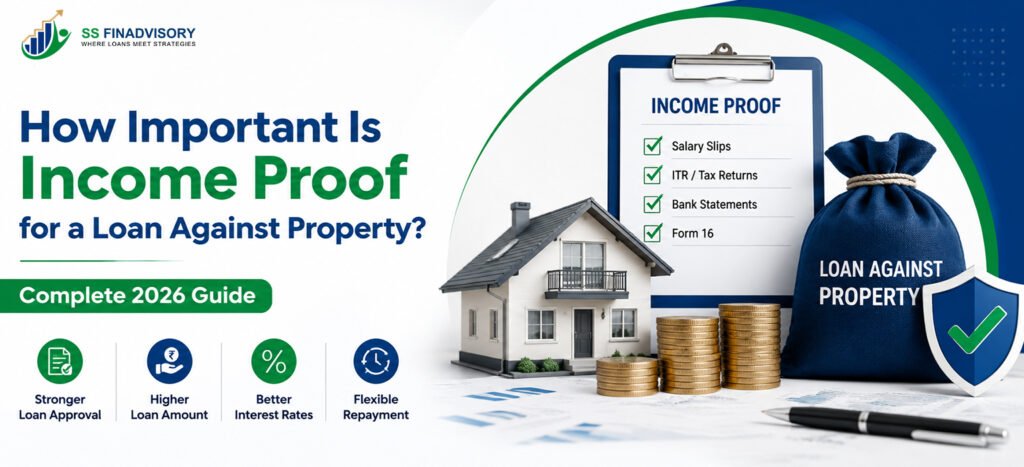
If you are planning to apply this year, income proof for loan against property will matter almost as much as the property itself. Lenders want to see not just that the collateral is strong, but that your cash flow can handle the EMI through good and bad months.
The problem is, most applicants only focus on property valuation and interest rate, and treat documents as a formality. That is how otherwise eligible borrowers face repeated queries, lower sanction amounts, or last-minute rejections.
Why Lenders Care So Much About Income Proof
A loan against property is usually a long-tenure borrowing with a high ticket size, so banks spend serious time on financial eligibility. Your income documents tell them three things: how stable your earnings are, how volatile your expenses might be, and how much buffer remains after the EMI.
For a salaried borrower, the lender will map your fixed monthly take-home against existing obligations. For self-employed clients, they look at average business income over 2–3 years, not just the most recent spike. This is why clear income verification can make the difference between a 50% and 65% loan-to-value sanction.
Key Income Documents For Salaried Applicants
For salaried profiles, lenders in India follow a relatively standard checklist of loan eligibility documents. Missing even one item can delay your file because credit teams are strict about consistency between HR records, salary credits, and your declared income.
The most important salary proof set usually includes the last three to six months’ salary slips, a current employment letter if you have just joined, and Form 16 for the previous two financial years. If your salary is split into many allowances or variable components, be prepared for the bank to only consider the fixed portion as stable income.
Banks will also insist on six to twelve months of bank statements from the account where your salary is credited. These bank statements should clearly show regular credits from your employer, no frequent cheque bounces, and a reasonable minimum balance, which gives underwriters comfort about your day-to-day money habits.
Income Proof Expectations For Self-Employed Borrowers
For business owners and professionals, the set of mortgage documentation is wider and the scrutiny is sharper. Lenders know that business income can be cyclical, so they try to assess the underlying trend rather than a single strong year.
A standard ITR for loan against property will usually cover the last two or three years, with complete computation pages and all schedules. Banks want to see that income has been declared properly and that tax has been paid. Large jumps or sudden drops often trigger follow-up questions, so be ready to explain those changes.
On top of the returns, banks ask for dedicated self-employed income proof such as audited financial statements, profit and loss account, balance sheet, and GST returns, where applicable. They compare these with bank credits to be sure that the turnover and profits reported to the tax department match what flows through your accounts.
How Lenders Use Income Proof To Calculate Eligibility
Once your income documents are in, the lender runs your financial eligibility through a set of internal ratios. Even though every bank has its own formula, the broad approach is similar across the industry.
First, they collate all salary proof or business income figures into a single average monthly number after tax. Then they subtract existing EMIs, credit card dues, and other fixed commitments to arrive at your net surplus. Most banks will only allow your total EMIs to reach 50–65% of your net take-home, depending on risk appetite.
For salaried borrower documents, they lean more on fixed pay and long-term allowances. In contrast, many lenders heavily discount variable commissions or incentive-based earnings, especially if the pattern is irregular. This conservative approach can lower your eligible amount, so you may be asked to add a co-applicant or accept a smaller sanction.
Common Documentation Pitfalls And How To Avoid Them
One of the biggest reasons for delays is incomplete or inconsistent income verification. The credit team is trained to look for gaps, and even small mismatches can send your application back for clarification more than once.
If the name on your income documents is different from your PAN or Aadhaar, update the records before applying. Also avoid sending low-quality scans; smudged figures or cut-off pages often lead to manual rechecks. Where there are cash components in your pay or business receipts, remember that lenders usually ignore cash income that does not appear in the banking system.
For mortgage documentation, clear communication with your relationship manager helps. Share a full list of your business entities, bank accounts, and existing loans upfront instead of waiting for the bank to find them in your CIBIL report. This saves days of back-and-forth during underwriting.
Improving Your Profile Before You Apply
You can’t rewrite your income history overnight, but you can prepare your loan eligibility documents in a way that presents a stable, reliable picture. This preparation is often the difference between a borderline file and an easy approval.
Start with your bank statements. Keep at least the previous six months free from cheque bounces or heavy cash withdrawals that don’t match your declared income. If you’re planning a loan against property in the next year, try to pay down high-interest personal loans or card balances so your fixed obligations look lighter.
For those with fluctuating self-employed income proof, consider applying in a year where your last two ITRs show a consistent or rising trend. Inflating expenses to save tax may look clever in the short term, but it directly reduces the income that the bank can consider for EMI sizing.
Why Income Proof For Loan Against Property Differs By Lender
Each bank or NBFC has its own comfort zone for sectors, professions, and risk tolerance, so the documents they ask for can differ. Some lenders are flexible on minor issues but very strict on tax compliance, while others focus more on stability of banking transactions.
Public sector banks may prioritise long employment history and conservative property valuation. Many private lenders are open to higher loan-to-value but expect very clean income proof for loan against property and may charge a slightly higher rate for borderline cases.
Extra Documents That Strengthen Your Application
Beyond the standard income documents, there are optional papers that can push your case in the right direction. Think of these as supporting evidence that reinforces the stability story your primary documents already tell.
For example, long-term contracts, appointment letters with clear variable pay structures, or letters sanctioning future increments help salaried applicants show predictable growth. Business owners can share major client contracts, fixed deposits, or rental agreements that demonstrate regular inflows outside of core operations.
When To Seek Professional Help
If your income structure is complex, a short consultation with a loan consultant or chartered accountant can be money well spent. They deal with bank policies every week and usually know which files will face objections.
Applicants with multiple businesses, foreign income, or large swings in profit often benefit from having their income documents organised into a simple summary before approaching any lender. That way, the credit manager doesn’t need to guess how your various accounts tie together.
Conclusion
Handled properly, income proof for loan against property becomes less of a hurdle and more of a tool to negotiate better terms. Clear, consistent documents make underwriters comfortable, which usually means faster approvals and smoother disbursals.
If you are unsure how your papers will be viewed, get your salary slips, ITR copies, and bank statements reviewed by a trusted advisor or by the team at ss finadvisory before you apply. A little preparation today can save weeks of stress and significantly improve your chances of a successful sanction.